

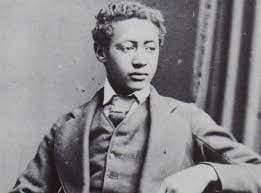
In an unfolding story of cultural and historical restitution, Buckingham Palace has recently refused a petition to return the remains of Ethiopian Prince Alemayehu, who was interred at Windsor Castle in the late 1800s. This decision has sparked discussion and controversy in the arena of international cultural heritage.
Born of Ethiopian royalty, Prince Alemayehu was spirited away to England in the aftermath of the Battle of Maqdala in 1868, a conflict that saw British soldiers plunder his father’s imperial stronghold. His life took an unexpected turn when Queen Victoria developed a keen interest in the young prince’s welfare, leading to his enrollment in some of Britain’s finest educational institutions. Notably, the Queen arranged for Alemayehu to attend the esteemed military academy at Sandhurst, although he left this esteemed establishment after less than a year. Relocating to the city of Leeds, the prince’s life was tragically cut short by pneumonia at the tender age of 18 in 1879. Upon his death, he was laid to rest at St George’s Chapel in Windsor Castle, an arrangement made at the behest of Queen Victoria.
Over the years, the Ethiopian government and members of Prince Alemayehu’s family have voiced repeated requests to the British royal family for the repatriation of his remains. In a poignant interview with the BBC, one of the prince’s descendants, Fasil Minas, articulated the family’s longing and sense of injustice. “We want his remains back as a family and as Ethiopians because that is not the country he was born in,” Minas lamented. “It was not right” for him to be buried in the UK, he added.
Despite these heartfelt pleas, Buckingham Palace has firmly held its ground. In a recent statement, a Palace spokesperson justified the decision, arguing that exhuming the prince’s remains could potentially disrupt the final resting places of other individuals interred in the catacombs of St George’s Chapel. The spokesperson stressed the Palace’s commitment to upholding the dignity of those deceased, while also recognizing the importance of honoring Prince Alemayehu’s memory. Furthermore, the Palace underscored that it had previously accommodated Ethiopian delegations’ requests to visit the chapel to pay their respects to the prince.

This scenario presents yet another episode in the broader narrative of cultural restitution, involving items of historical and artistic significance. Thousands of valuable artifacts, sculptures, and other artworks – with origins dating as far back as the 16th century – were seized by British colonists and are currently displayed in the British Museum. The question of returning these colonial-era spoils to their original countries has become an increasingly important matter for Western nations. The case of Prince Alemayehu’s remains signifies an extension of this discussion into the realm of human remains, adding another layer of complexity to an already intricate debate.



Comments (0)
No comments yet. Be the first to share your perspective!