

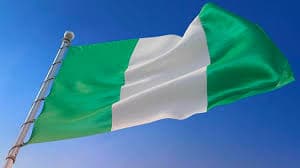
Nigeria, Africa’s most populous nation and a vibrant tapestry of diverse ethnicities, cultures, and religions, has a history that is as complex as it is rich. Since gaining independence from British colonial rule on October 1, 1960, Nigeria has navigated through many political landscapes, including military dictatorships, civil war, and ultimately, democracy. Yet, one significant date stands out in this journey – June 12, which is now celebrated as Democracy Day. But why is Nigeria’s Democracy Day celebrated on June 12? To understand this, we need to delve into the annals of Nigeria’s political history, specifically, the pivotal year of 1993, the year of the June 12 Presidential elections.
Historical Context
Prior to 1999, Nigeria was under the rule of military regimes for most of its independent history. However, in 1993, the country had the opportunity to transition to a civilian-led democratic government. The then-military ruler, General Ibrahim Babangida, promised to hand over power to a civilian government, leading to the organization of a presidential election scheduled for June 12, 1993.
The 1993 Election


The June 12, 1993, presidential election was a defining moment in Nigeria’s history. It was considered by both local and international observers as one of the freest and fairest elections ever conducted in the country. The two leading candidates were Moshood Kashimawo Olawale (M.K.O.) Abiola of the Social Democratic Party (SDP) and Bashir Tofa of the National Republican Convention (NRC).
M.K.O. Abiola, a philanthropist and successful businessman from the southern part of Nigeria, ran a campaign that cut across tribal, religious, and regional lines, promising hope and a better life for all Nigerians. When the election results started coming in, it became apparent that Abiola was in the lead.
Your brand here. Reach a focused African audience.
Partner with Anttention Media Africa across high-trust business and tech reporting.
Advertise with usHowever, in a stunning twist of events, General Babangida annulled the election results just as it became apparent that Abiola was on the path to victory. The annulment of the election results led to widespread protests, civil unrest, and a political crisis that marked one of the darkest periods in Nigeria’s history.
The Fight for Democracy
Following the annulment, Abiola, steadfast in his quest for democracy, declared himself the lawful president of Nigeria on June 11, 1994. His declaration led to his arrest and incarceration by the military government. Despite mounting pressure both locally and internationally, Abiola was never released and died in detention under mysterious circumstances on July 7, 1998.
However, the struggle for democracy did not die with Abiola. It served as a catalyst that ignited a broader movement for the restoration of democracy in Nigeria. This struggle eventually led to the end of military rule in 1999, marking the beginning of Nigeria’s Fourth Republic, which has continued till today.
June 12 as Democracy Day
For many years after the restoration of democracy, Nigerians, particularly those from the Southwestern part of the country, commemorated June 12 as ‘Democracy Day‘ in honor of Abiola’s sacrifice and the ideals of democracy he stood for. However, the federal government officially recognized May 29, the day the military handed over power to a civilian government in 1999, as Democracy Day.
This changed in 2018 when the Nigerian government, in a landmark decision, officially recognized June 12 as the country’s Democracy Day. This recognition was not just in honor of M.K.O. Abiola’s presumed mandate, but also to acknowledge the immense sacrifices made by many Nigerians in the pursuit of democracy and to serve as a reminder of the country’s journey towards achieving a government ‘of the people, by the people, for the people’.
Conclusion
In celebrating Democracy Day on June 12, Nigeria is not just commemorating a day or an individual, but an ideal. The idea of a nation where every citizen has a voice, where power truly belongs to the people, and where the tenets of democracy are upheld. It is a reminder of history fraught with struggle, sacrifice, and resilience, as well as a beacon of hope for a more inclusive, equitable, and democratic future. Above all, it serves as an acknowledgment of the supremacy of the will of the people and an affirmation of Nigeria’s commitment to upholding the democratic values for which so many have fought and died.





Comments (0)
No comments yet. Be the first to share your perspective!